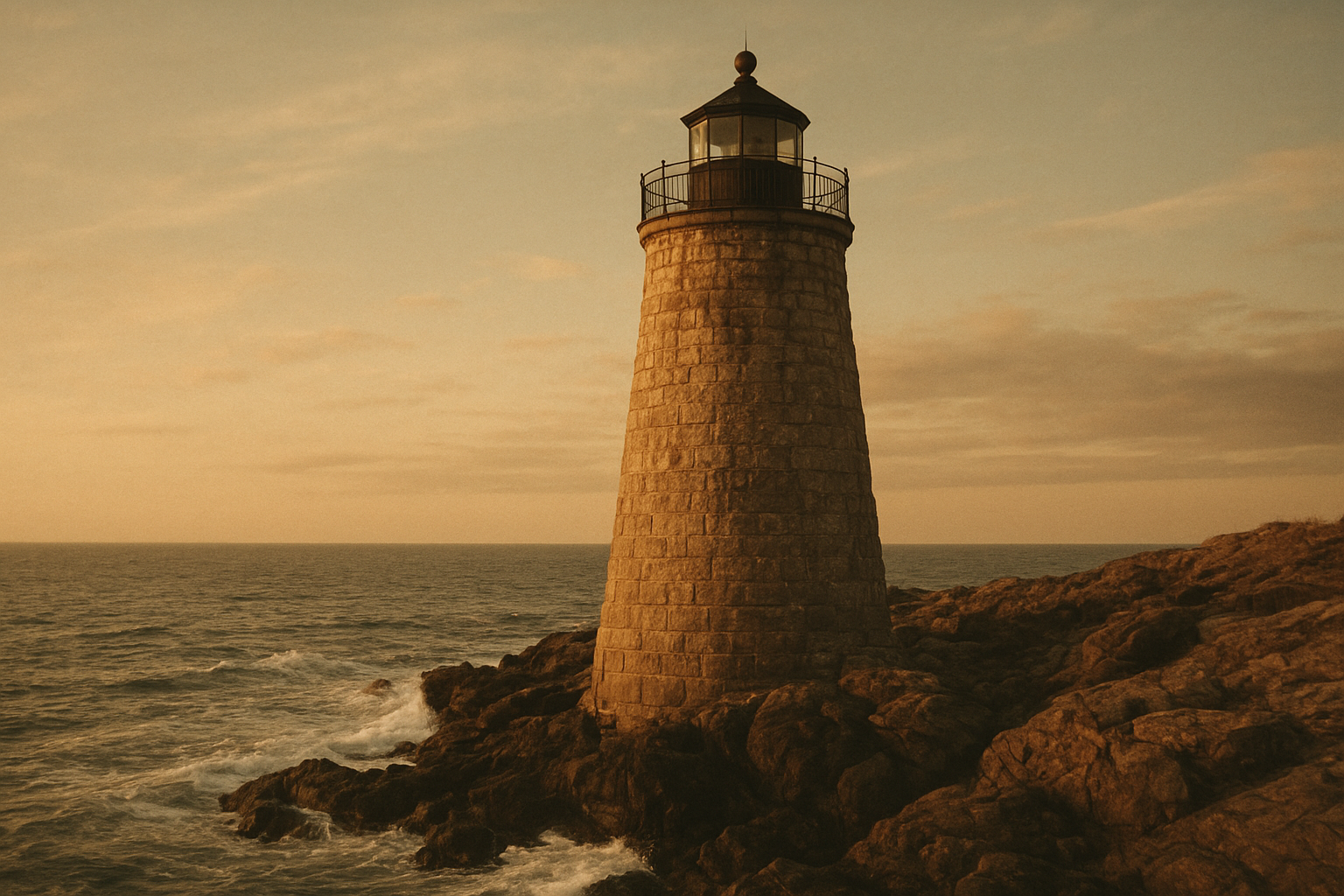
Early Beacon Era
Practical Light for Hazardous Headlands
Simple signal structures emerged where reefs and fog repeatedly disrupted coastal passage.
Before the photographs, the coast reads as a sequence of practical eras shaped by weather, shipping, keepers, and later preservation.
Early Beacon Era
Simple signal structures emerged where reefs and fog repeatedly disrupted coastal passage.
Trade Expansion Era
As maritime traffic grew, lighthouse placement became more systematic across key routes and inlets.
Modernization Era
Improved optics, communications, and automation shifted keeper routines while retaining local maritime value.
Preservation Era
Communities began documenting surviving towers as cultural landmarks tied to memory, labor, and coast identity.
History Photo Essay
These frames preserve how northern-coast towers were lived in and worked from day to day: weather-worn masonry, practical interiors, and the quiet mechanics of warning ships through fog and tide.